




Timber Preservation
Current South African building regulations require that all timber used in a building must be treated in a SABS registered facility, protecting the wood from borer beetle and rot. At Somerset Timbers our treatment division pressure impregnates timber with preservatives. Timber treatment is exclusively offered for wood supplied by Somerset Timbers, ensuring compliance with our strict quality standards.
Read the Somerset Timber Safety Guide for information on handling treated timber.

What is Pressure Treatment Of Timber?
Timber treatment is a highly specialized industrial process that involves the impregnation of SABS approved chemicals under pressure into dry timber, which renders the wood nutrients unpalatable to insects and uninhabitable to fungus.
We have 2 treatment plants here at the Somerset Timbers yard and have been treating timber since 1996. As SABS registered treaters, we pressure treat timber to the stringent SABS 1288 and SANS 10005 codes and apply the certification mark to all our treated timber.
Timber is treated with varying intensity to ensure the right amount of preservative is applied for the end application. This is defined by different hazard classifications (H3, H4 etc) as per the following SABS classifications:
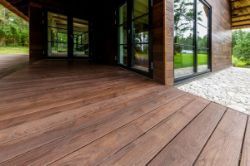
- H3 Exterior above ground – moderate hazard: Timber exposed to rain and sun but NOT ground: Decking, fencing, garden furniture, gates: CCA Treatment only
- H4 Ground contact – high hazard: Timber planted in the ground or exposed to ground contact such as fencing poles, deck support poles: CCA Treatment only.
Our chemical treatments include:
- Water-based Permacure Chromated Copper Arsenate (CCA) – Leaves a visible greenish tinge to timber.
- Solvent-based Vacsol Azure – This is a specialised clear treatment for mainly interior timber and does not change the dimensions of the timber.

SABS
Regular audits by the SABS ensure safety and treatment compliance.

CCA Timber Treatment
Chromated Copper Arsenate (CCA) is one of the world’s most popular wood preservatives and has been in use for more than 75 years and has broad-spectrum usage and efficacy.
CCA treated timber is odourless, safe and easy to handle after treatment, and requires no special equipment during installation. It has a service life of up to 25 years, although CCA treated wood can last for 40 years and longer.
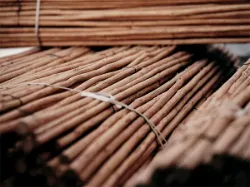
A water-borne preservative, it offers timber long-term protection against wood-destroying fungi, insect larvae and termites and is used for structural timber, agriculture poles (pine and eucalyptus) and transmission poles.
Treatment process:
- CCA is impregnated into the timber by vacuum and pressure at our timber treatment plant during a 2-hour process in the pressure cylinder that is monitored by the SABS to ensure compliance with their specifications.
- Once the process is complete, the timber is left slightly damp, allowing the solvent (water) to evaporate over a few days.
Technical details:
- The active ingredients in this treatment are chromium (47.5%), arsenic (34.0%) and copper (18.5%), with the extraordinary effectiveness of CCA lying in the combined action of these three elements.
- Copper inhibits the reproduction of bacteria and also acts as a fungicide, preventing the growth of fungi such as Lenzites trabea, Poria monticola and Lentinus lepideus from using preserved timber as a potential food source. During the preservation process, the divalent copper ions bond to the cellulose and hemicellulose in wood via a redox reaction.
- Chromium allows the CCA to penetrate deeply into the wood, and for the arsenic and copper to form permanent bonds with the wood. The greenish hue of trivalent chromium can be seen in the pale green colour of CCA treated wood.
- Arsenic is used as a secondary fungicide, making the wood resistant to even copper-resistant fungi. It also functions as an insecticide, leaving wood resistant to attack from xylophagous and detritivorous wood borers.
Application
- A relatively inexpensive treatment ideal for exterior and interior use.
- Water-based therefore not recommended for products with a high tolerance fit i.e.: tongue and groove products.
- It leaves a greenish tinge to timber and therefore is not advisable for timber where an uncoloured finish is required. (Use Vacsol Azure clear treatment for this).
- Although not normally necessary, CCA Treated timber can be painted, as long as the correct type of paint is used.
Depending on use, CCA treated timber is treated to H3 or H4 classifications:
- H3 Exterior above ground – Moderate Hazard: Decking, fencing, garden furniture, gates, external cladding
- H4 Ground contact – High Hazard: Fencing poles, Deck support poles

Clear Vacsol® Azure Treatment
Vacsol® Azure is a solvent-based, non-metallic preservative with a combination of permethrin and azole biocides that ensure the treated wood products are fit for all H2 end-use applications. The formulation requires pressure/vacuum application and does not change the colour of the treated timber.
Vacsol® Azure provides protection against:
- Insects including auger beetles (Bostrychidae), powder post Beetles (Lytidae), pinhole borers (Platypodidae) & furniture beetles (Anobiidae).
- Termites including dry wood Cryptotermes) and subterranean (Coptotermes & Schedorhinotermes) and giant termites (Mastotermes).
- Fungal decay (including brown, white and soft rots) and fungi.
How does Vacsol® Azure work?
- The actual preservative constituents are a synthetic pyrethroid insecticide, permethrin, and organic azole fungicides, Tebuconazole and Propiconazole.
- The solvent-based treatment does not affect the moisture content, strength, dimensions or glue bonds and hence can be done on timber products in their final shape and form.
- The pressure treatment process drives the preservative deep into the cellular structure of the timber to provide protection against fungal decay, termites and other insects.
What application is Vacsol® Azure suited to?
- Vacsol® Azure treatment is suitable for use in H2 applications, which can be described as “interior, not subject to moisture and above ground”.
- It can be used for H3 applications, which can be described as “exterior or subject to moisture and above ground” – provided a suitable sealer is applied to the timber to prevent moisture ingress and subsequent leaching of the product.
- It is NOT suitable for H4 ground contact applications.
Why use Vacsol® Azure over other timber preservatives?
- Vacsol® Azure prevents dimensional changes of the timber during the treatment process particularly for wood products such as finger-jointed, laminated or engineered products as well as mouldings, flooring and structural timber, treatment.
- Vacsol® Azure is at the forefront of the modern revolution in engineered and remanufactured wood products.
What about the smell, is it permanent or will it disappear ?
- The odour of the treatment fades substantially as the solvent evaporates
- The evaporation period depends on a number of factors but should only be a few days after treatment or once the timber is separated from a pack and left in an open ventilated area.
- When the treated timber is installed in the end-use situation there should be no perceptible odour.
Read the SomTim Safety Guide for information on handling treated timber.

Timber Acclimatisation
Timber is a natural product and is subject to many stresses during drying, processing, treating and storage. Treat timber with respect and consider the 25 to 75 years that it took for the tree to grow to a stage where it can be harvested and used by man.
In order to produce timber mouldings and profiles to be used in any construction, the product goes through several processes such as sawing, kiln drying, treating, planing and cross-cutting. These processes can cause twist, warp, shrinkage and expansion of timber. It is imperative that all timber be allowed to adjust naturally to the environment in which it will be installed.
- Example 1: Tongue and groove flooring manufactured at 12% moisture content is immediately installed into a new building with fresh plaster walls giving a room moisture content of 15%. Once installed the flooring is exposed on all sides to this moist air and will expand as it draws in moisture causing lifting of the flooring if insufficient gaps have been left on the edges. As the building dries out over a period of time, the flooring dries and shrinks causing gaps. This also happens with insufficient underfloor ventilation and high water tables in winter. The installer will inevitably blame the product.
- Example 2: Timber cladding is installed shortly after CCA treatment (based in water i.e. high moisture content). As the cladding dries, poorly fastened nails pull out and boards cup and pull away from the wall. The exposed side of the cladding dries and shrinks at a quicker rate (exposure to sun/wind) than the inside (no sun/air movement) of the board causing excessive movement. The timber is behaving in a completely natural way. The installer will inevitably blame the product.
The keys to prevent movement in timber are correct acclimatisation to the site in which it will be installed, which can be achieved as follows:
- Allow freshly treated timber to dry on-site before installation.
- Do not install flooring in freshly built rooms.
- Store unused timber under roof cover. Do not wrap in plastic.
- Check the moisture content of the timber AND the site to ensure they are within 1% difference.
- Do not allow timber to lay in the sun and rain unused. The continuous drying/wetting cycle will cause even the most stable of timbers to move.





 Comalytics